
Word Search Hotel
Lotum two GmbHWord
5.0287.00 Reviews
- Version
- 1.48.0
- Installs
- 100.00K
- Age Rating
- Everyone
Screenshots
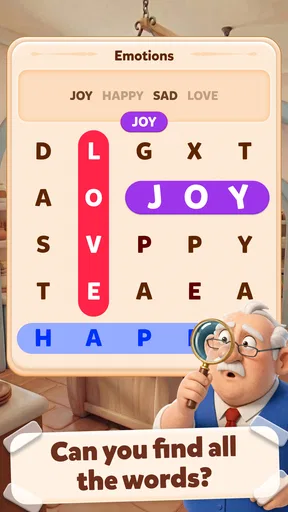
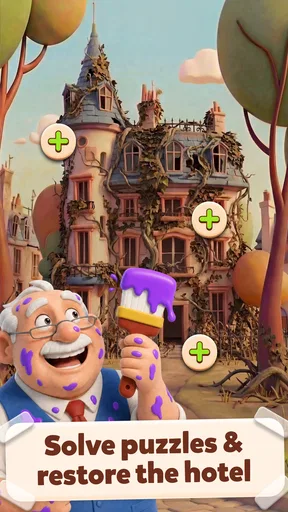
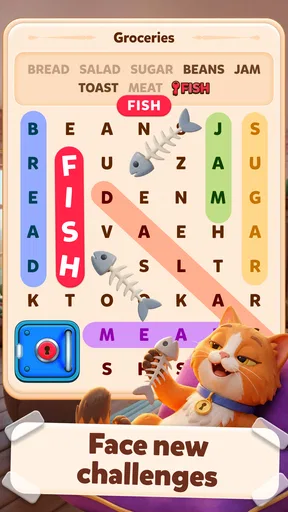
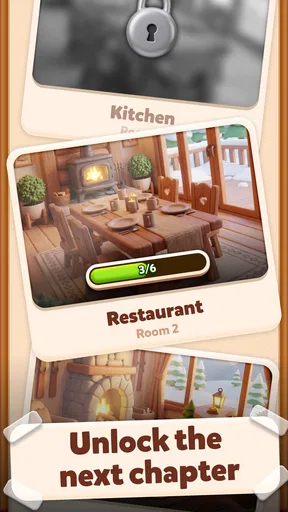
Our Review of Word Search Hotel
 Analysis by Appyee
Word Search Hotel takes a familiar word-search puzzle and gives it a more purposeful rhythm: you are not only looking for hidden words, but also working toward the improvement of charming hotels. That extra layer is the reason I found it easier to return to than a plain puzzle book. A short session feels complete because there is a visible sense of progress beyond simply finishing a grid.
At its heart, this is a free word game from Lotum two GmbH, aimed at players who enjoy calm concentration with a little time pressure. It is rated for Everyone, runs on devices using Android 7.1 or later, and has reached over one hundred thousand installs. The current release is version 1.33.0, while its average score sits at 4.7 from around two thousand ratings. Those figures suggest a healthy audience, but the more important question is whether the hotel theme genuinely improves the puzzle experience. For me, it does, although not in every situation.
Why the hotel makeover changes a familiar word search
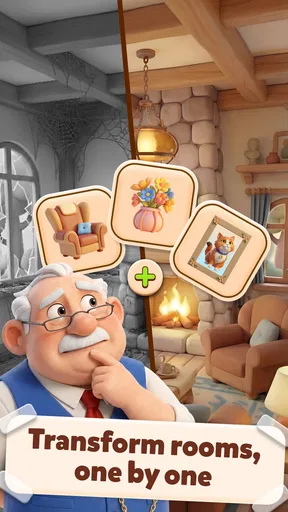
The verified capability that defines this game is the combination of timed word searches and hotel restoration. The word hunt remains the main activity, but the reward is connected to a place that gradually becomes more inviting. That connection gives each puzzle a reason to matter. In a standard word-search app, I may finish a board and immediately forget it. Here, completing one feels like a small step in a longer project.
The makeover idea also changes how I judge my performance. I am not simply asking whether I found every word. I am thinking about whether I can solve the next board efficiently enough to keep moving through the hotel. This creates a gentle push without turning the experience into a harsh competitive challenge. The game can be relaxing, but the clock keeps my attention from drifting completely.
That balance is particularly useful for players who like casual games with a clear destination. Some word apps offer endless grids, which is convenient but can feel repetitive after several rounds. Word Search Hotel gives the activity a setting and a reason to continue. The setting is not just decoration in my experience; it provides the emotional reward that a bare list of completed puzzles often lacks.
Still, the theme will not transform the basic puzzle for everyone. If you already love traditional word searches because you want nothing except the grid, the hotel layer may feel like an extra step between puzzles. I see it as a framing device rather than a completely new type of word game. The appeal depends on whether you enjoy seeing a broader project grow around a simple repeated activity.
What the timed format feels like during play
The clock gives each puzzle a different texture from a leisurely newspaper word search. I cannot scan the board indefinitely while casually checking every row. I need to make decisions: search for the most obvious words first, keep track of likely directions, and avoid spending too long on a difficult cluster. The timer makes familiar vocabulary feel more tactical because recognition speed matters as much as patience.
I found that the best approach is not always to search from the first letter of each word. When the board becomes busy, I look for unusual letter combinations or distinctive endings instead. A word containing a less common letter can be easier to locate than a short, ordinary word. This is a small change in habit, but it helps prevent the clock from turning every difficult board into random tapping.
Another useful adjustment is to scan in a consistent pattern before jumping around. I usually check horizontal lines, then vertical ones, and finally diagonals. That routine reduces the chance of repeatedly revisiting the same area. It also makes mistakes easier to understand: if I am running out of time, I can tell whether I am missing diagonal words or simply searching too slowly.
The time limit adds energy, but it also creates the game’s main source of friction. A player who wants a quiet, completely pressure-free puzzle may find the clock distracting. Even when the board itself is manageable, the awareness of time can make the session feel more like a test than a break. I would choose a conventional untimed word-search app for bedtime or for moments when I want concentration without urgency.
How the hotel progression works as motivation
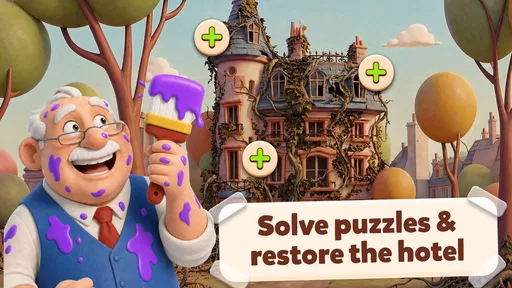
The hotel setting gives successful puzzle solving a visual purpose. Rather than treating every board as an isolated exercise, the game links progress to the condition and appearance of its locations. That makes the reward easier to understand at a glance. I do not need to invent my own reason for playing another round; the unfinished hotel supplies one.
This is also where the game is more approachable than a purely score-driven word title. Not every player wants leaderboards, complex strategy, or difficult resource management. The hotel goal is easy to grasp, so a new player can focus on the word search rather than learning a complicated system. The result is a friendly entry point for someone who enjoys puzzles but does not usually play games built around progression.
The trade-off is that the long-term motivation depends heavily on enjoying the visual project. If the restoration theme does not appeal to you, completing more puzzles may eventually feel like repeating the same central action. I would not recommend it to someone searching for deep vocabulary lessons, elaborate hotel management, or a broad simulation. Its identity remains firmly rooted in word searching.
One practical way to use the progression is to treat it as a stopping point rather than a demand. I like playing until I finish a puzzle and then deciding whether I actually want another. That keeps the hotel improvements pleasant instead of turning the game into a routine obligation. The structure supports short sessions well, especially when I have only a few spare minutes.
Where it fits into everyday play
The strongest scenario for me is a waiting period: sitting in a reception area, taking a break between errands, or having a few quiet minutes before an appointment. A word search is easy to understand immediately, and the hotel objective gives the session a satisfying endpoint. I can complete a board, see the result of my effort, and put the phone away without feeling that I abandoned a complicated task halfway through.
It also works for someone who wants a screen activity that feels more focused than an endless social feed. The need to locate words encourages active attention, while the hotel theme keeps the mood lighter than a formal brain-training exercise. I would especially suggest it to people who enjoy crossword-style thinking but prefer visual searching over clues and definitions.
Families may find the Everyone rating reassuring, and the basic concept is accessible to a wide range of ages. However, I would still consider the timer when choosing it for a child or for a player who becomes frustrated by countdowns. The puzzle rules are simple, but speed can change the emotional experience. A relaxed adult may see the clock as motivating, while a younger or less confident player may see it as pressure.
For commuters, the game can be useful when attention is available but time is fragmented. I would not play it while walking, cycling, or doing anything that requires awareness of the surroundings. The timed search encourages close visual focus, so it is better suited to a safe, stationary break than to multitasking. That sounds obvious, but the game’s short-session design makes this distinction worth mentioning.
Small techniques that make the clock less intimidating
My first tip is to avoid chasing one stubborn word for too long. If a word does not appear quickly, I move to another part of the list and return later with a fresh visual angle. Staying fixed on one area is especially costly under time pressure because it creates the impression that the whole board is impossible.
My second tip is to use the word list strategically. Longer words are often easier to identify because they create more possible starting points and recognizable patterns. Short words can hide among many accidental combinations, so I prefer to leave them until the board has fewer distractions. This is not a guaranteed shortcut, but it makes my scanning more deliberate.
My third tip is to learn from the direction that repeatedly slows me down. Diagonal searches are easy to overlook because the eye naturally follows rows and columns. If I finish with several diagonal words missing, I make that direction a priority on the next board instead of simply trying to tap faster. The improvement comes from changing the search method, not from rushing.
A fourth useful habit is to stop treating every missed word as a failure. The hotel progression gives the game a broader arc, so one imperfect round does not erase the value of the session. I find that this mindset helps me keep the timer in perspective. The game is more enjoyable when I use the clock to add focus rather than as a judgment of my intelligence.
The compromises behind the free download
Word Search Hotel is free to download and play, but it includes in-app purchases ranging from $0.99 to $99.99 per item. That is an important consideration for anyone who prefers games with a single upfront cost or no purchase prompts at all. The free entry makes it easy to try the central loop, yet players who become invested in the hotel progression should pay attention to what they choose to buy.
I would approach the purchase system with a simple rule: play long enough to decide whether the timed word search itself is enjoyable before spending anything. No optional purchase can make the basic search pattern appealing if you do not like it already. Conversely, if you enjoy the puzzles, you can judge any paid option by whether it genuinely improves your personal routine rather than by the promise of faster progress.
The time limit is another genuine compromise. It prevents the game from becoming passive, but it can reduce the sense of calm that many people expect from word searches. Players who like to study every letter carefully may prefer an untimed alternative. Players who find ordinary word searches too slow will probably appreciate the added urgency. This is not a minor setting preference; it changes the mood of the entire game.
There is also a repetition trade-off. The hotel makeover supplies context, but the recurring action is still searching for words in a grid. If you need changing mechanics every few minutes, this may not hold your attention. I would choose a crossword, anagram, or broader puzzle collection when I want different kinds of reasoning in the same session. Word Search Hotel is strongest when repetition feels comforting rather than limiting.
On the positive side, the concept is much easier to pick up than a strategy game with several interacting systems. I do not need to memorize elaborate rules before enjoying a round. That simplicity makes it suitable for casual use, but it also means experienced word-game players should not expect a deep vocabulary curriculum or a highly complex puzzle engine. The value is in the combination of accessibility, speed, and visible hotel progress.
Who will get the most from the game
I think the best match is a player who wants a familiar word activity with a little momentum. You will probably enjoy it if you like spotting patterns, working against a clock, and receiving a visual reward after a successful puzzle. The hotel theme is especially helpful if endless boards usually leave you wondering why you should continue.
It is also a good fit for people who prefer short, self-contained sessions. You can approach it during a break without learning a new system every time you return. The progression gives repeated visits some continuity, while the word-search rules remain immediately recognizable. That combination makes it more welcoming than many games that require a long opening tutorial or sustained attention.
I would be more cautious about recommending it to players who dislike countdowns, purchase options, or repeated puzzle formats. Someone seeking a fully relaxing word search may be happier with a traditional untimed app. Someone looking for serious language development may prefer crosswords, dictionaries, or spelling-focused games. Someone who wants a hotel simulation should also look elsewhere, because the hotel is the setting and reward framework rather than the main management challenge.
The developer, Lotum two GmbH, has positioned the game around a clear and approachable idea rather than an overloaded feature set. Its 4.7 average and more than one hundred thousand installs show that the formula has found an audience, while the free price lowers the barrier to testing it yourself. I would still make the decision based on the clock and the makeover loop, since those are the parts that determine whether the experience suits you.
After spending time with it, my recommendation is positive but specific: try it if you want word searches to feel more purposeful and slightly more energetic. The hotel progression turns completed grids into steps toward something visible, and the timer gives even easy vocabulary a moment of focus. The best reason to play is not the makeover alone, but the way it gives a simple puzzle a satisfying stopping point.
For me, that makes Word Search Hotel a strong casual word game rather than a universal replacement for every puzzle app. I would keep it installed for waiting rooms, quiet breaks, and short sessions when I want concentration without a complicated learning curve. If you prefer unlimited time, deeper wordplay, or completely predictable costs, another category alternative will serve you better. If the idea of improving a charming hotel one focused search at a time sounds appealing, this free game is well worth trying.
Privacy and Permissions
See what permissions an app requests and how it handles your data.
- Wi-Fi connection information
- view Wi-Fi connections
- Other
- view network connections, full network access, control vibration, prevent device from sleeping, Google Play license check
Verdict
Strengths of Word Search Hotel
- Relaxing word-search gameplay suitable for short sessions.
- Large variety of themed puzzles keeps the experience fresh.
- Hotel-building progression adds motivation beyond solving puzzles.
- Helpful hints make difficult word grids more approachable.
- Simple controls are easy for players of all ages.
Limitations of Word Search Hotel
- Some puzzles may feel repetitive after extended play.
- Hints and bonuses can be limited without watching ads.
- Frequent advertisements may interrupt the gameplay flow.
- Later levels can become noticeably more challenging.
- Progression may feel slow for players who avoid optional purchases.
Other Releases by Lotum two GmbH
View All
Word Solitaire Hotel
Word4.8
Similar Picks in This Category
View All
Word Search - Word Puzzle Game
Bluetile4.8

Word Search Quest - Puzzles
Blackout Lab4.8

CodyCross: Crossword Puzzles
Fanatee, Inc.4.7

Words of Wonders: Crossword
Fugo Games4.9

Wordscapes: Word puzzle game
PeopleFun4.7

Word Search Explorer
PlaySimple Games4.9
Frequently Asked Questions
What is Word Search Hotel?
Word Search Hotel is a relaxing word puzzle game that combines classic word-search challenges with a hotel-themed progression system. Players look for hidden words in letter grids, complete levels, and usually earn rewards that help them advance through different hotel locations or areas. It is designed for casual play, making it suitable for short sessions or longer gameplay when you want something calm and mentally engaging.
How do you play Word Search Hotel?
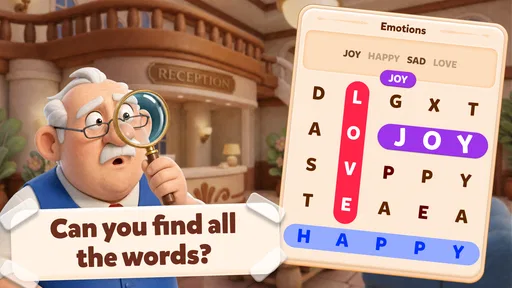
The main gameplay is based on finding listed words hidden inside a grid of letters. Words may appear horizontally, vertically, diagonally, or in reverse, so carefully scanning the board is important. After finding a word, you generally swipe across its letters to select it. Completing the puzzle allows you to move forward, unlock additional stages, and collect in-game rewards or bonuses.
Can Word Search Hotel be played without an internet connection?
Some parts of Word Search Hotel may work offline, especially previously loaded word-search levels, but the exact availability can depend on the version installed and the device being used. Features such as advertisements, cloud synchronization, special events, leaderboards, purchases, or reward systems may require an internet connection. It is best to open the game online at least once before attempting to play offline.
Is Word Search Hotel free to download and play?
Word Search Hotel is generally available as a free download, allowing players to start solving puzzles without paying an upfront purchase price. However, free games commonly include optional in-app purchases, advertising, or paid items that can provide hints, remove ads, or speed up progress. Check the app-store listing and purchase settings before downloading, particularly if children may use the device.
Is Word Search Hotel suitable for children and casual players?
Word Search Hotel can be a good choice for casual players who enjoy vocabulary games, relaxing puzzles, and gradual progression rather than fast action. Its suitability for children depends on the content rating, advertising, purchase options, and the difficulty of its word lists. Parents should review the official store information and consider enabling device-level purchase restrictions before allowing younger players to use it.
Play our best games!


